A house in Kerala is not just walls, rooms, and a roof. It is about creating a space that can survive the monsoon, suit your lifestyle, respect the climate, and remain comfortable for years to come. But even with an experienced team, homeowners need to be aware of the common mistakes to avoid that can impact a project’s budget, quality, and timeline, and the right construction company in Trivandrum can make a world of difference.
Small planning errors, such as selecting the wrong plot or failing to consider ventilation, drainage and future maintenance, can soon become costly problems. Thoughtful planning is especially important in Trivandrum, where more and more modern homes are being combined with architectural detailing inspired by Kerala.
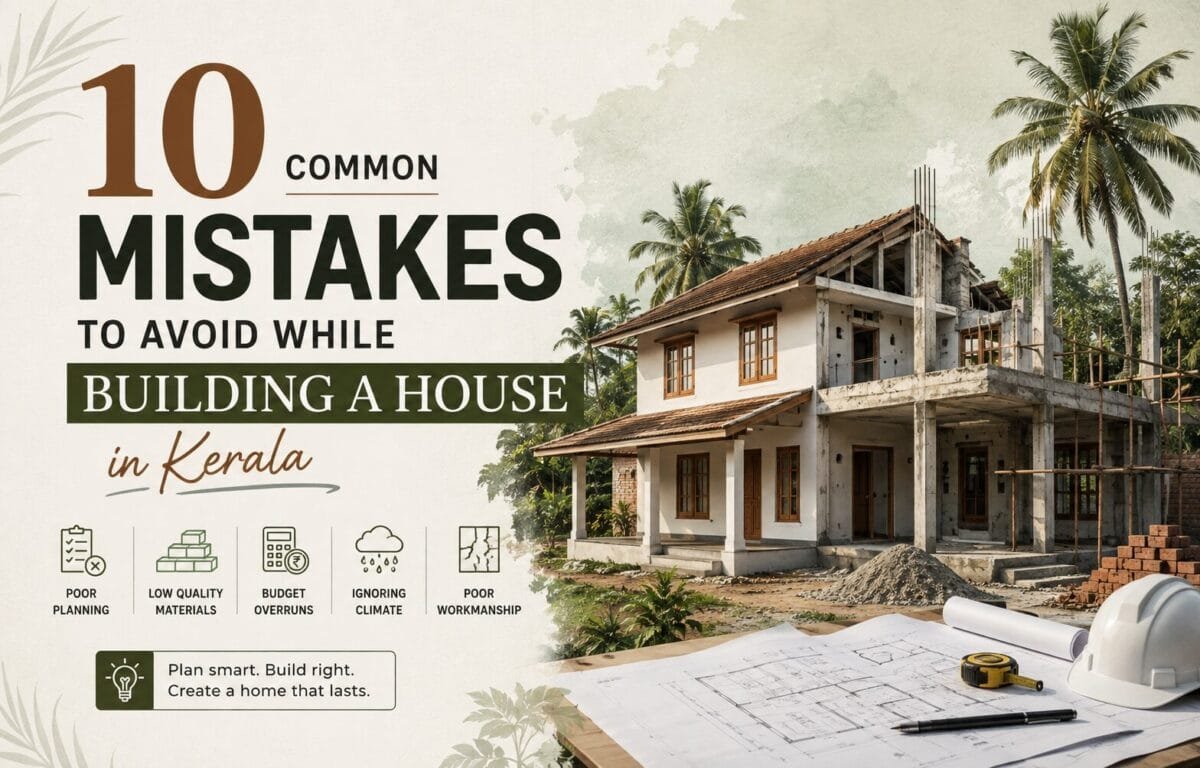
At Build Art Interiors & Constructions, we believe that a successful home begins long before the construction process. Here are 10 common mistakes to avoid while building a house in Kerala for homeowners.
If one waits too long to consider these costs, a house that appears affordable in the planning stage can become much more expensive.
Break your budget into separate sections before you build. Incorporate a contingency sum for unforeseen costs, such as soil problems, alterations in material prices, or changes during construction.
A professional construction team can help you set realistic priorities before money is spent on the site.
A pretty site is not necessarily a pretty building site. There are many factors like rain, drainage, soil condition, road access, slope, and surrounding development that can directly impact the construction of your home and its upkeep for the years in Kerala.
Check before the plot is finalised:
Conditions around Trivandrum may vary widely from place to place. A plot that seems fine during the dry season might have drainage or water-flow problems with heavy monsoon rain.
Getting the site right before you start designing can save you the expense of corrections later.
The tropical climate of Kerala should have an impact on the design of a house.
Careful architectural decisions are needed to cope with heavy monsoon rain, humidity, intense sunlight, and warm temperatures. The same house that looks great in a 3D rendering may not be comfortable in real life.
Large windows offer beautiful views and natural light but require proper shading and orientation.
A well-designed Kerala house should be naturally comfortable and not solely dependent on air conditioning.
Architecture, structural engineering, construction, electrical, plumbing, and interiors are all interrelated.
However, problems can arise in the construction process, with different professionals working independently.
For example, a wall may be designed without taking a plumbing line into account. The electrical point can be placed where a wardrobe is to be placed later. A ceiling design may be incompatible with air-conditioning or lighting requirements.
A team that understands architecture, construction, and interiors all working together can reduce coordination problems.
This is why a top construction company in Trivandrum that can manage many aspects of the project with one coordinated approach is often sought after by homeowners.
The goal is not just to complete the building. The aim is to ensure that the completed home functions as a unified design.
Everyone wants to control construction costs. But choosing every material based solely on the lowest quotation can create problems later.
A cheaper product may have:
A good construction decision is a balance of:
Cost + Maintenance + Appearance + Durability + Quality
For instance, the best waterproofing system may cost more upfront but save you money on costly moisture-related repairs down the road.
Don’t just ask for the cheapest option; ask your construction team why they are recommending a specific material.
For a home in Kerala, waterproofing is not just a technical detail. It is one of the most important elements of construction.
Heavy rain can reveal weaknesses in roofs, bathrooms, balconies, terraces, basements, external walls and other vulnerable areas.
Waterproofing should be carefully considered for:
Consider where you will use:
Plumbing is the same thing. Planning should be done for kitchen sinks, bathrooms, washing areas, water heaters, drainage points, and water storage before construction reaches the relevant stage.
Architecture and interior design also need to be in tandem here.
Consider the following before you decide on room sizes:
This is especially important if you are looking for a modern interior with integrated storage.
Trends today can make a home look beautiful. But will you still love the design in ten years?
Ultra-trendy colours, finishes, layouts, or decorative elements can date surprisingly fast.
It’s better to build a timeless base and then add in trends with elements that are easier to change.
Think about keeping major elements somewhat timeless:
Then let personality come through:
It allows you to give your home a new look without having to do expensive remodelling.
Your home shouldn’t just look good on the day you move in. It should work for you as your lifestyle changes.
Think about how your family will use the house five, ten or even twenty years down the line.
Then you have an extra bedroom?
Does an elderly family member need a toilet that is easier to use?
Will you need a home office?
Do you need more storage?
Is a potential future floor extension possible?
Future-proof planning can include provisions for:
Good planning today can make future upgrades easier and less costly.
Selecting a construction partner is one of the most important decisions you will make. Don’t just go for the company that offers the lowest quote. Look at the whole picture.
Enquire about prior residential projects, and especially homes like what you want to build.
A quote should be clear on what is covered and what is not. That prevents misunderstandings later.
Enquire about materials, workmanship, waterproofing, structural work and quality-control practices.
There are many decisions in construction projects. Your contractor should be able to communicate well about progress, changes, costs and timelines.
If your project involves architecture, construction and interiors, then coordination between these stages is invaluable.
At Build Art Interiors & Constructions, Trivandrum, we have taken a different approach to create homes where architecture, construction and interiors come together, rather than treating them as entirely independent stages.
One of the biggest mistakes is poor planning. Prior to construction, budgeting, site analysis, climate-responsive design, material selection, waterproofing, and future requirements should all be considered.
Kerala has heavy monsoon rain, so waterproofing is very important. Drainage and waterproofing planning is essential for roofs, terraces, bathrooms, balconies, and other exposed areas.
Ideally, professional planning should take place before construction begins. You can engage an architect to help you assess the site, develop the design, coordinate technical requirements and create a clearer scope of work before choosing or finalising the construction team.
Don’t just consider price. Experience, past projects, scope of work, quality of materials, communication, project management, workmanship, and clarity of cost and responsibilities.
For many homeowners, an integrated approach can make coordination easier: When architecture, construction and interiors are planned together, practical issues related to electrical points, lighting, storage, furniture, plumbing and finishes can be addressed earlier.
Yes. Ideally, important interior requirements should be considered in the architectural and construction planning. This makes it easier to avoid problems with electrical points, plumbing, ceiling designs, storage and room dimensions later on.
Key issues are natural ventilation, suitable positioning of windows, shading, insulation where appropriate, efficient roof design, moisture protection and effective drainage. Designing for climate responsiveness can increase comfort and possibly reduce the need for mechanical cooling.
To build a house is a major financial and emotional commitment. The decisions you make before and during construction can influence your home’s comfort, appearance, durability, maintenance, and long-term value.
The good news is that you can avoid many construction mistakes.
If you have a good site evaluation, a realistic budget, climate-conscious architecture, good quality materials, well-coordinated execution, and a thoughtful interior plan, you can build a house that feels beautiful now and will serve your family for years to come.
When you are planning to build a new home in Trivandrum, selecting the right team from the beginning can make the entire process more organised and less stressful.
Build Art Interiors & Constructions combines architecture, construction, and interior design to help homeowners realise their ideas into well-designed homes.
Dreaming of your new home in Trivandrum? Talk to Build Art Interiors & Constructions today and start your journey to a home that suits your lifestyle, budget, and the Kerala climate.